Quick Summary (click to expand)
- Applications: cell lysis, DNA shearing, nanoparticle dispersion, emulsification
- Direct energy via titanium probe tip (high amplitude)
- Digital controls with pulse mode & timer (model dependent)
Key Features
- High Intensity: Direct probe energy for rapid processing.
- Digital Control: Programmable timer, pulse mode, and amplitude control.
- Lab & Industrial: Models from 120W to 1500W available.
Technical Specifications
| Power Output | 120W, 250W, 500W, 750W, 1000W, 1500W |
|---|---|
| Frequency | 20 kHz / 28 kHz (High Amplitude) |
| Probe Material | Titanium Alloy (Autoclavable) |
| Processing Volume | 0.5 ml to 1000 ml+ (Depending on model) |
| Control Modes | Pulse Mode, Timer, Amplitude, Temp Sensor (Model dependent) |
| Enclosure | Sound Proof Box (Optional but Recommended) |
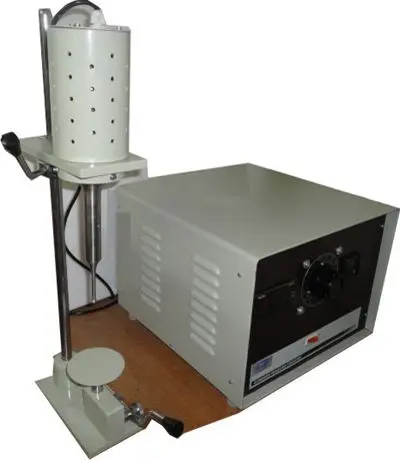
Ultrasonic Probe Sonicator & Homogenizer
LeelaSonic manufactures high-performance Ultrasonic Probe Sonicators (also known as Ultrasonic Homogenizers or Cell Disruptors) for laboratory research, pharmaceutical, and biotechnology applications in India.
Unlike ultrasonic baths that distribute energy over a large volume, our probe sonicator focuses high-intensity ultrasonic waves directly into the sample via a titanium tip. This generates intense cavitation shear forces—ideal for cell lysis, DNA shearing, nanoparticle dispersion, and nano-emulsions.
As a high-intensity lab sonicator and ultrasonic liquid processor, the LeelaSonic system gives precise control over amplitude, pulse mode and processing time for repeatable R&D results.
Get Best PriceApplications
- Biological / Pharma: Cell disruption (lysis), protein extraction, DNA/RNA shearing.
- Chemical / Material Science: Dispersion of nanoparticles (Graphene, CNTs, metal oxides), deagglomeration.
- Emulsification: Creating stable nano-emulsions (oil/water) for cosmetics and pharma.
- Degassing: Rapid removal of dissolved gases from liquids.
LeelaSonic India supplies ultrasonic processors to CSIR labs, IITs, pharmaceutical R&D centers and biotech companies. For indirect sonication or temperature control, see our Ultrasonic Sonicator Bath and Ultrasonic Bath with Chiller.
Use a probe sonicator when you need high-intensity energy in a small sample — cell lysis, nanoparticle dispersion, emulsification, DNA shearing. Use a sonicator bath for HPLC degassing, glassware cleaning and gentle dissolution. For temperature-sensitive samples with batch processing, see our sonicator bath with chiller.
Industries & Applications — Probe Sonicator
| Industry | Application |
|---|---|
| Pharmaceutical R&D | Nanoparticle formulation, liposome preparation, API dispersion, cell disruption for extraction |
| Biotechnology & Life Sciences | Cell lysis, protein extraction, DNA/RNA shearing, bacterial disruption, organelle isolation |
| Material Science & Nanotechnology | Graphene dispersion, CNT deagglomeration, ZnO & TiO₂ nanoparticle dispersion, sol-gel processing |
| Food Technology | Nano-emulsification, homogenisation, extraction of bioactive compounds, food sterilisation |
| Cosmetics & Personal Care | Oil-in-water emulsion preparation, active ingredient dispersion, cream and serum homogenisation |
| Chemical Engineering | Sono-chemistry reactions, catalyst dispersion, liquid-liquid extraction, defoaming |
| Environmental Science | Soil and sediment extraction, water sample preparation, sludge disintegration |
Probe Sonicator Models — Power & Volume Guide
| Model | Output Power | Probe Dia. | Processing Volume | Typical Use |
|---|---|---|---|---|
| LS-PS120 | 120W | 6mm | 1ml – 50ml | Cell disruption, small batch DNA shearing |
| LS-PS250 | 250W | 13mm | 10ml – 200ml | Nanoparticle dispersion, emulsification, protein extraction |
| LS-PS500 | 500W | 20mm | 50ml – 500ml | R&D scale nanoparticle processing, emulsions |
| LS-PS1000 | 1000W | 25mm | 200ml – 2L | Industrial sonoprocessing, scale-up batches |
| LS-PS1500 | 1500W | 34mm | 500ml – 5L | Industrial high-volume emulsification, sono-chemistry |
Get Price & Technical Consultation
Share your sample volume, application and required power — we will recommend the correct probe sonicator model.
Request QuoteFrequently Asked Questions
LeelaSonic probe sonicators are priced from approximately ₹35,000 for the 120W model to ₹2,50,000 for the 1500W industrial model. Price depends on power output, probe diameter and accessories. Factory-direct from Dombivli — no dealer margin. Get a price quote today.
A probe sonicator delivers high-intensity focused energy directly into the sample via a titanium tip — ideal for cell disruption, nanoparticle dispersion and emulsification. A sonicator bath delivers gentle indirect sonication — better for HPLC degassing, glassware cleaning and dissolution. For biological samples, a probe sonicator with pulse mode and ice cooling is the standard method.
In pharmaceutical R&D and biotech, ultrasonic probe sonicators are used for cell disruption (lysis), protein and enzyme extraction, nanoparticle formulation and liposome preparation, DNA/RNA shearing for genomics, emulsification for drug delivery systems, and dispersion of API particles in suspension formulations. It is standard equipment in most IITs, CSIR labs, pharma R&D centres and biotech companies across India.
The terms probe sonicator, ultrasonicator, ultrasonic homogenizer and ultrasonic cell disruptor all refer to the same type of equipment — a high-frequency ultrasonic processor with a titanium probe tip. The difference is terminology: research labs often say "probe sonicator" or "sonicator," while material scientists say "ultrasonicator" and food/pharma industries say "homogenizer" or "liquid processor."
Probe diameter determines the volume range. A 6mm micro probe is used for 0.5ml–50ml (microtubes). A 13mm probe handles 10ml–200ml (standard lab use). A 20–25mm probe is used for 50ml–1000ml (scale-up). A 34mm probe handles 500ml–5L (industrial). Share your sample volume and application and we will confirm the correct probe.
Pulse mode alternates between sonication ON and OFF (e.g. 2 sec ON, 2 sec OFF). This prevents sample overheating — critical for heat-sensitive biological samples like proteins, enzymes and nucleic acids. Always use pulse mode with ice cooling for biological applications. For nanoparticle dispersion and emulsification, continuous mode is generally acceptable.
Strongly recommended. Probe sonicators operating at 20–28 kHz generate noise of 90–100 dB in the audible range, which causes hearing fatigue during extended use. LeelaSonic supplies optional soundproof enclosures for all models that reduce noise to safe levels and also serve as secondary containment during processing.
Can it process nanoparticles?
Yes. The high-amplitude ultrasonic waves create intense cavitation shear forces capable of deagglomerating and dispersing nanoparticles — including CNTs, graphene, ZnO, TiO₂ and metal oxides — uniformly in liquid suspension. Ultrasonic dispersion produces narrower particle size distributions than mechanical stirring and is the standard method for preparing nanoparticle suspensions for research and formulation.
Related Products
For HPLC degassing, glassware cleaning & gentle dissolution — indirect, uniform sonication.
Sonicator Bath with ChillerTemperature-controlled sonication at 5–20°C for heat-sensitive pharma samples.
Pharma & Lab Sonication GuideApplication guide covering all ultrasonic techniques for pharma and research labs.
Choosing Ultrasonic Frequency20 kHz vs 28 kHz vs 40 kHz — when to use each frequency for different applications.